Developing Essential Exercise Sequences for Optimal Results in Functional Training
Developing the essential movement models is a critical aspect of practical exercise that allows individuals to attain maximum performance while reducing the risk of injury. Practical training focuses on exercises that replicate natural physical actions, such as squatting, pushing, dragging, and rotating. Grasping these core movement models provides a base for all additional exercises and activities, from daily activities to sport performance. Proper technique, alignment, and physical control are crucial in these movements to ensure even muscle engagement and joint stability. When these movements are properly executed, the body can move efficiently, produce power, and retain control across a broad range of movement.
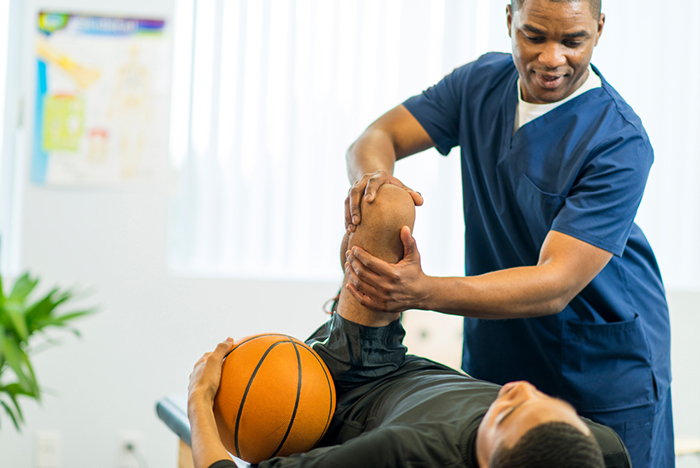
Refining fundamental movement models demands attention to balance, flexibility, and control. Balance is essential for holding proper posture during active movements, while range of motion enables the joints to function freely without limitation. Coordination ensures that various muscle systems function in unison efficiently. For instance, a lunge requires the integration of the pelvis, knees, and lower limbs while preserving spinal position and activating the core. Training plans that prioritize controlled, deliberate form of these patterns enhance muscle efficiency, enabling the nervous system and muscles to coordinate efficiently. Over time, consistent training reinforces connective structures, improves joint health, and boosts overall athletic potential.
Enhancing results in functional training includes incorporating progression and variety into movements. Novices may begin with weight-free forms of basic patterns, while advanced trainees can implement resistance bands, free weights, or balance platforms to stimulate strength, stability, and capacity. Progression should adhere to a structured order, beginning with mastering the basic technique and gradually raising resistance, speed, or complexity. This approach not only develops muscular ability but also reduces the likelihood of incorrect patterns that can contribute to injury. Coaches and trainers often employ pattern evaluations to detect weaknesses or asymmetries, tailoring plans to correct personal needs and optimize functional performance.
Regular training of these fundamental movement frameworks develops muscle endurance, skeletal integrity, and movement control. Functional training prioritizes compound movements that activate multiple muscle groups simultaneously, producing more effective and organic movement patterns. For example, a push-pull sequence can work the pectorals, back, shoulders, and arms while improving see page joint support. Incorporating twisting and anti-rotational exercises helps improve midsection stability, coordination, and the capacity to produce power in multiple directions. By conditioning the physique in ways that replicate real-life demands, individuals enhance their capacity to execute everyday tasks, sports actions, and body demanding activities safely and effectively.
Incorporating these essential motion get redirected here patterns into a organized plan supports sustained health and peak performance. Functional training not only builds muscular system but also improves posture, coordination, and total motion efficiency. Correct form and consistent training enable the body to adapt to physical demands while minimizing the risk of strain. Individuals who consistently practice with these principles develop power, mobility, and assurance in their motion skills. Whether for competitors pursuing high-level performance or adults aiming for improved physical function, mastering and enhancing fundamental movement patterns is a cornerstone of effective functional training.